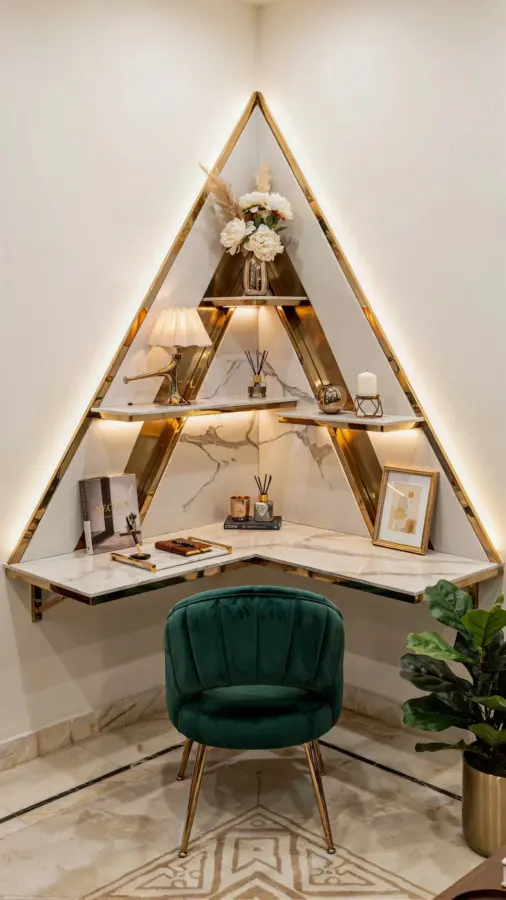
You are literally sitting on the floor of your living room with your laptop on a cushion, and your back is starting to complain. It’s time to talk about corner desk ideas for small spaces, because that empty corner by the window is begging to become something better than a pile of laundry. A DIY corner desk setup turned my tiny apartment office into the coziest little work nook, and I want to help you build yours.
The best part? You don’t need to be a carpenter or own a single power tool to make this happen. I built mine using two cheap drawer units and a solid wood shelf from the hardware store, and I didn’t even have to measure anything twice. Here’s the thing about corner spaces: they usually look too big for a plant but too small for a real desk, so we just ignore them. But with a little creative thinking, that awkward corner can become the most functional spot in your whole home.
## Why a Corner Desk Setup Works Better Than a Standard Desk
A straight desk against a wall takes up a ton of floor space and usually leaves empty gaps on either side. A corner desk uses the angle of the room to create a deep, triangular work surface that fits right into the dead zone. You get more usable surface area without actually taking up more room in the middle of your space.
Think about it like this: you’re reclaiming space that was doing absolutely nothing. That corner behind the door or next to the bookshelf can hold your monitor, a coffee mug, and a stack of papers without eating into your walking path. I honestly don’t know why more apartment dwellers don’t do this. It just makes so much sense.
Here are a few solid options depending on how handy you feel:
– The two-drawer method: buy two identical low file cabinets, place them at an angle in the corner, and drop a piece of butcher block or a plywood circle on top. Zero cutting required if you buy the right dimensions.
– The shelf bracket DIY: screw two heavy-duty L-brackets into the corner walls and rest a cut piece of wood on top. It looks like it’s floating, which is great for tiny rooms.
– The modular cube trick: use two cubby shelf units at different heights to create a stepped desk with built-in storage underneath. It’s very forgiving if you make mistakes.
## How to Build a DIY Corner Desk with Zero Prior Knowledge
Look, I’m not going to pretend I walked into this with confidence. I had never used a drill before I built my own space-saving home office station ideas, and I managed to pull it off in about two hours. For the simplest version, you need two things: a piece of wood and two sturdy supports that are all the same height.
Ok so here’s the beginner process. First, measure the distance from the corner along both walls to figure out how wide you want your desk. Buy a piece of pre-cut wood that fits, or ask the hardware store guy to cut one for you, that’s usually free. Then place your drawer units or cabinets in the corner, angled slightly, and lay the wood across them.
The trick is to leave the wood overhanging a bit on both sides so you don’t have a perfect triangle that traps your legs. An angled corner desk with flat front edges gives you way more knee room. Trust me, I made this mistake on my first attempt and spent a week bumping my knees every time I crossed my legs. Don’t be like me.
## Space-Saving Hacks for a Cozy Home Office Nook
Once your workspace is physically there, the real magic happens in how you dress it up. A corner can feel like a cave, so lighting matters more than anything else. I used a clamp-on gooseneck lamp attached to the back edge of the desk, which saves surface space and gives off the warmest little glow during late evening work sessions.
You also want to make the wall in front of you feel intentional. If you’re facing the corner directly, hanging a pegboard right at eye level gives you vertical storage for headphones, scissors, and all those tiny office supplies that usually live in a drawer of chaos. It turns the whole project into a cozy home office nook instead of just a desk wedged into a corner.
A few small things that made a huge difference for me:
– A small rug under the chair to save your floor from scratches and keep your feet warm
– A tension rod with a curtain hanging right behind the desk to hide the messy wall outlets and cables
– A narrow shelf mounted above the monitor for plants and framed photos
– Cable clips stuck to the underside of the wood to keep your charger cords from snaking all over the floor
## Choosing the Right Dimensions for Your Small Space Workstation
The biggest mistake people make is measuring only the floor space, not the actual depth of the desk. A corner desk needs to be deep enough for your monitor plus your keyboard, but not so deep that you can’t reach the back. I’d say somewhere between 24 and 30 inches is the sweet spot for a small space workstation.
Height is also a thing people get wrong. Your elbows should bend at about a 90 degree angle when your hands are on the keyboard, which usually means the desk surface sits around 28 to 30 inches from the floor. If your supports make the desk too tall, wheeled chair risers work. If it’s too low, get a thick yoga mat and fold it into a cushion. Honestly, my first attempt was too high, and I just used an ottoman for a week before I fixed it.
Think about the angle of your monitor too. Since you’re sitting at an angle in the corner, you might be tempted to face straight into the corner, but that kills your neck. Angle your chair slightly outward, and put your monitor on a small stand so the top of the screen is at eye level.
## Styling the Space to Feel Cozy and Not Cluttered
Here’s where things get fun. The goal is to make a tiny space feel like a retreat, not a storage closet. So go easy on the decorations. I have a tiny fake succulent, a mug full of pens, and one framed picture of my dog, and that’s it. The empty space is what makes it feel calm.
Warm lighting and a nice-smelling candle can completely change the vibe. If you do most of your work in the evening, get a dimmable lamp that doesn’t blast harsh blue light. And if you’re renting, don’t panic about drilling holes. You can fill holes easy with spackle, so just do the thing and worry about it later.
A small wooden tray on the desk catches keys and loose change so they don’t roll off the angled back edge. That back edge is the one annoying part of a corner desk, things slide into the gap, so a tray or a tall lip on the wood saves you a lot of digging around. I’ve lost exactly one AirPod to that void, never again.
## What to Avoid When Setting Up a Corner Work Area
First, don’t block a window. The whole point of a corner desk in a small space is usually to get natural light, so if you’re placing the desk in front of the window, keep the wood lower than the window sill. You want to see outside while you work, not create a permanent box fort.
Second, don’t forget about airflow back there. Chargers and power strips can get hot, so give them breathing room instead of cramming them tight against the wall. Also, check if you can reach an outlet before you build. Extension cords are ugly and dangerous, but if you absolutely need one, use a flat cord and a cable cover.
Third, don’t make it too heavy. If you’re using a temporary setup like the bracket method, don’t put your laser printer on top. That thing is a tank and will pull the brackets off the wall. Keep heavy equipment on the floor or on a separate lower shelf. Trust me, the sound of a falling printer is a sound you never want to hear.
## A Quick Word on Materials and Budget
You honestly don’t need to spend a lot here. My whole setup cost under sixty dollars because I bought an unfinished pine board and two secondhand nightstands. If you want it to look fancier, a can of wood stain or a coat of matte paint makes cheap wood look like a million bucks.
The best way to shop for a corner desk does not involve buying an actual “corner desk,” because most manufactured ones are overpriced and honestly kind of awkward. Instead, look at bathroom vanities, small sideboards, or IKEA hack pieces. Butcher block countertop offcuts are also a secret gold mine, they’re thick, sturdy, and often sold at a discount because they’re just slightly too small for a kitchen.
If cutting wood in the store makes you nervous, ask a friend who owns a circular saw to do it for you. Offer them dinner. Works every time.
## Make the Space Your Own and Actually Use It
Look, the true test of any home office idea is whether you actually want to sit there every day. I’ve built two different workstations over the years, and the one that survived was the one that made me feel good. So add something weird, something personal, something that makes you smile when you walk past it. A tiny odd decoration, a weird-shaped vase, a silly sign, whatever speaks to you.
Start small. You don’t need a perfect plan before you begin, just buy a piece of wood and two supports, rest them in the corner, and see if the height feels right. You can always adjust the details later. Honestly, the hardest part is just starting.
Once the desk is up, you’ll wonder why you didn’t do this months ago. You’ll walk into the room, see your cute little corner nook waiting for you, and suddenly you’ll want to work on a budget spreadsheet just to sit there a little longer. That is the real victory.
So grab a measuring tape, look at your dead corner, and give it a second chance. You’ve got the space, you’ve got the skill, and you definitely deserve a proper spot to work from home. I hope you build yours this weekend. When you do, feel free to come back and tell me how it turned out.
Leave a Comment