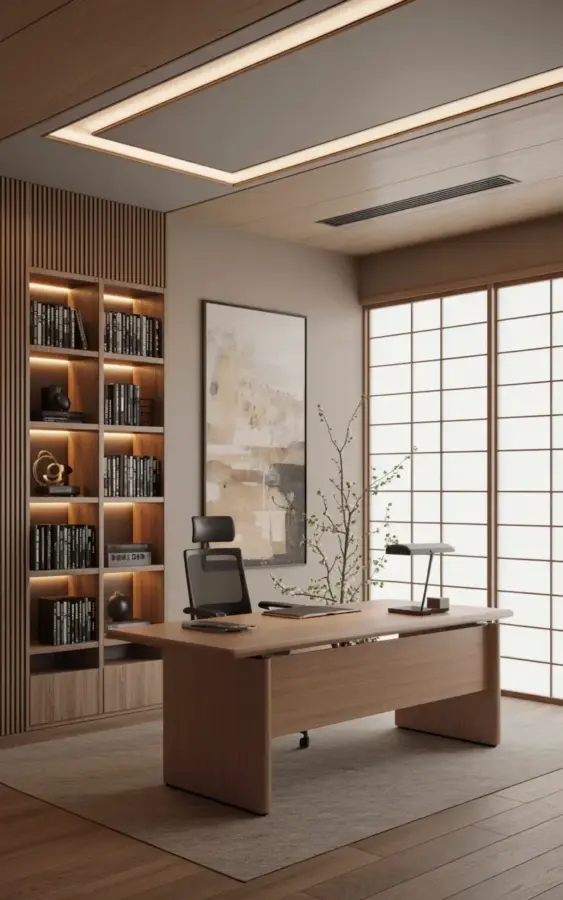
Open your laptop on a cold, gray morning and the last thing you want is a workspace that feels like a waiting room. This Japanese style home office, with its light oak desk and that gorgeous shoji screen, is the opposite of sterile. It is warm, quiet, and honestly, it makes me want to sit down and actually get some work done. The kind of room that feels like a deep breath, not a caffeine IV drip.
I spent a long time looking at this exact setup, and the first thing I noticed was the light. That shoji screen on the right side, it does not just divide the room. It turns the harsh winter sun into a soft, milky glow that makes everything look a little bit softer, a little bit calmer. It is a brilliant trick for anyone who works from home and is tired of staring at a harsh rectangle of bright white window light on their monitor.
—
Why a Shoji Screen is a Winter Workspace Game-Changer
So, what actually makes a shoji screen so special? It is not just a wooden frame with paper in the middle, even though it looks exactly like that. The magic is in how it handles light. Traditional rice paper diffuses it completely, so you get no harsh shadows and no annoying glare on your computer screen.
During winter, when daylight is already scarce, this is everything. Instead of feeling like you are trapped indoors, the room glows from within. Here’s the thing: the screen also adds a layer of privacy without making the room feel smaller or darker. You can tuck a messy corner behind it, hide an outlet, or just use it to visually separate your work zone from the rest of the room.
Pairing a Light Oak Desk with a Sleek Black Chair
Look, the furniture in this photo is doing the heavy lifting, especially that light oak desk. It is a warm, natural tone that prevents the room from feeling icy or sterile. If you have ever sat at a cold white desk in January, you know exactly why this matters. The wood brings a bit of nature indoors, which is a lifesaver when the world outside is frozen and grey.
Then you have the black chair, which is the perfect counterweight. It adds a modern, grounded element to all that softness. The contrast is what makes the space feel intentional and stylish, not accidental. If you are recreating this look, do not skimp on the chair. A sleek, ergonomic black office chair will anchor the whole aesthetic, just make sure it is comfortable enough for long winter workdays.
The Built-In Shelf: Warm LED Lighting for Dark Evenings
Ok so, the built-in illuminated bookshelf on the left wall is my favorite part of the whole room. It holds black books and storage compartments, but the real star is the warm LED lighting behind them. When the sun goes down at 4:30 PM in December, this shelf keeps the room feeling cozy and alive instead of dark and depressing.
It is a simple lighting strategy that changes the entire mood of the office. You can replicate this with a few LED strip lights tucked behind the shelves in your own bookcase. Just set them to a warm white or soft yellow tone, never a harsh blue or bright white. The goal is to make the room feel like a cozy hideaway, not an operating theater.
Curating a Minimalist Office Layout That Works
A minimalist office is not about having zero stuff. It is about giving everything a specific home so your brain can relax. This room does it beautifully with a simple color palette of wood tones, beige, and black.
To achieve this look, you need to be a little ruthless with your belongings. Here is a quick list of what deserves a spot in a peaceful, minimalist workspace:
– Books you actually reference or love (everything else gets a shelf elsewhere)
– A few storage boxes that fit the neutral color scheme, wicker or simple white work well
– One or two personal items with meaning, like a small photo or a favorite stone
– All your cables hidden away (this is the hardest part, but it is worth it)
The large abstract artwork in muted beige and gray tones on the wall is a masterstroke. It adds visual interest and texture without adding visual noise. If you squint, the colors just melt into the background, which is exactly what you want.
Creating a Calm Atmosphere with Textures and Light Layers
There is a reason this space feels calm, and it is not just the furniture. It is the layers. You have the smooth wood, the soft paper of the shoji screen, the sleek metal or plastic of the chair, and the fabric of the artwork. Honestly, a room full of matching everything feels dead. Mixing textures makes it feel alive.
Think about lighting in three layers. First, you have the ambient light from the LED shelf. Second, you have the task lighting you would add on the desk, maybe a small architect lamp. Third, you have natural light filtered through the shoji screen. Having those different levels prevents eye strain and keeps the room feeling dynamic.
I’ll add a weird note here: the way the light hits the paper on the shoji screen reminds me of the packaging paper my grandmother used to wrap gifts in, the kind that was slightly translucent. It is probably a weird association, but it is exactly why this room feels nostalgic and safe to me. Anyway, that is the feeling you are going for.
A Beginner’s Guide to Hanging a Large Abstract Artwork
Since this photo has that lovely large abstract artwork on the wall, let us talk about actually hanging one. If you are new to this, do not guess. Measure the width of your desk and aim to hang the art at about 60 to 70 percent of that width. The center of the artwork should be at eye level, usually around 57 inches from the floor to the middle of the piece.
This is a practical skill, so let me share a silly mistake I made once. I hung a picture too high and it looked like it was floating in space. My friend told me it looked like I was trying to show the art to a giraffe. So, get a friend to hold the frame while you stand back and look, it saves you from hammering nails in the wrong spot. It makes the whole room feel anchored and intentional.
Bringing the Japanese Winter Workspace Home
So how do you actually get this look without a designer on speed dial? Start with the anchor pieces: a light wood desk, a dark chair, and some kind of paper or fabric divider to soften a corner. You can even use sheer linen curtains stretched on a tension rod if a full shoji screen is out of budget. The light diffusing effect is still there.
Then, focus on the small stuff. Swap harsh bulbs for warm ones. Hide your cables in a fabric box. Clear the junk mail off your desk and put something natural, like a piece of driftwood or a small plant, near your monitor. It is a gradual process, but every little change makes those dark winter evenings a bit more bearable.
—
Creating a workspace that feels this peaceful is a small, slow project. But I promise you, it is worth doing. I would love to know which part of this room inspires you the most, the screen, the lighting, or just the overall vibe. Leave me a comment and let me know what your dream winter workspace looks like or what you plan to change first in your own home office setup.
Leave a Comment