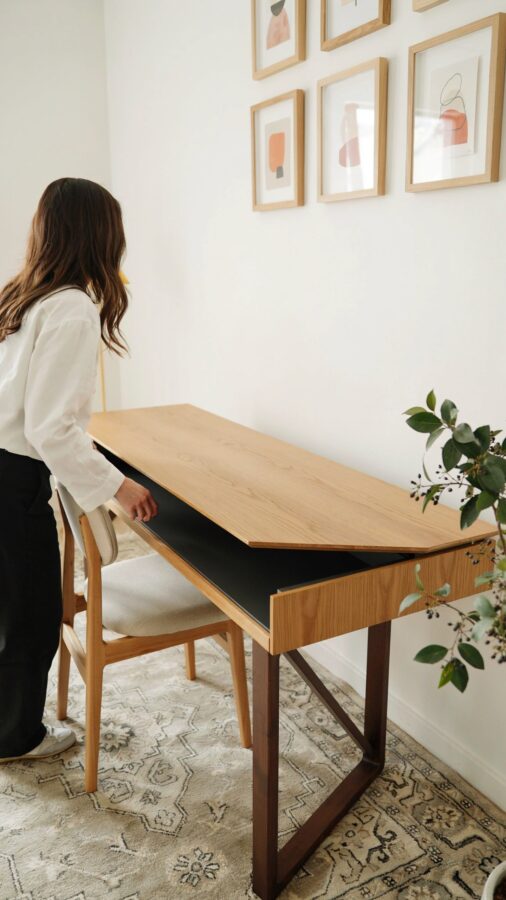
Why a transformer table works for small spaces
If you live in a studio apartment, a spare room that doubles as a guest bedroom, or even a tiny corner of your living room, you already know the struggle: you need a place to work, but you don’t want your desk to take over the whole room. That is exactly where a transformer table saves the day. These foldable, convertible desks let you create a dedicated work zone when you need it and tuck it away when you don’t. I have used one for the past year, and it completely changed how I feel about my small home office setup.
The key benefit is flexibility. A transformer table can be mounted on the wall or sit on a narrow frame, folding down to a few inches deep. When you are done with your tasks, you simply lift it back up or slide it into a cabinet. This keeps your floor space open for yoga, dinner, or just breathing room. For small space living, that kind of adaptability is a game changer.
How to choose the right transformer desk for your home office
Not all transformer furniture is created equal. Before you buy, think about your actual work habits. Do you need space for a laptop and a notebook, or do you also have a monitor and a keyboard? Look for a model with a weight rating that matches your gear. I once bought a lightweight fold-down shelf thinking it would work, but my laptop alone made it wobble. Learn from my mistake.
Here are a few specific things to check when shopping for transformer furniture for your small home office:
- Mounting type: Wall mounted desks save the most floor space, but they require drilling into studs. Freestanding folding desks are easier to install and can be moved.
- Folded depth: Measure how far the desk sticks out when folded. Anything under six inches is ideal for a tight corner.
- Surface material: A wood or laminate top is sturdy and easy to clean. Avoid glossy finishes because fingerprints show quickly in a small room.
- Integrated storage: Some transformer tables come with a small shelf or a drawer. That extra inch of storage can hold pens, a phone, or a coaster.
Setting up your minimalist desk zone in a corner
Once you have your transformer table, the next step is finding the right spot. Corners are often wasted in small rooms, but they are perfect for a compact desk. Place the table so that when it is folded down, it does not block a door or a walkway. I put mine against a wall that is only twenty inches wide, and it still works fine because the desk flips down flush.
For a truly minimalist desk arrangement, keep only the essentials on the surface. A monitor on a slim stand, a wireless keyboard, and a single plant. Everything else lives in a drawer or a bin nearby. When you fold the desk up, all those items need to be cleared anyway, so having a clutter free routine makes the transition quick. This is where the real space saving magic happens.
Decor tips to keep your work from home setup tidy
A transformer table looks best when it blends into the room, not screams office. Paint the desktop the same color as your wall for a seamless look. I used a white laminate desk against a white wall, and when it is folded up, most people do not even notice it is there. That visual calm is exactly what you want in a multipurpose room.
To stay organized without adding visual clutter, try these simple ideas:
- Use a small pegboard on the wall above the desk to hang headphones, cables, and a clock.
- Attach a thin cable management tray underneath the desk to hide cords.
- Keep a small tray or bowl for loose items like keys and earbuds so they do not scatter.
- Choose a desk lamp that folds flat or sticks to the wall. A swing arm lamp works well.
Daily routine ideas to make your folding desk a habit
The biggest challenge with a transformer table is remembering to actually fold it away. If you leave it down all day, you lose the space saving benefit. I built a simple habit: every time I finish a work session, I spend exactly two minutes clearing the surface and flipping the desk up. That small routine keeps my room feeling open and my mind ready to shift from work mode to relax mode.
For people who work in short bursts, try setting a timer. Work for forty five minutes, then fold the desk up and take a break in the now clear space. This rhythm works surprisingly well for deep focus because you have a physical cue that the work period has ended. It might sound silly, but the act of folding the desk becomes a mental off switch.
Real examples of transformer tables in multipurpose rooms
I have seen a few clever setups that go beyond the basic wall mounted drop leaf. One friend converted a shallow I
#minimaldesk #homeofficeideas #transformerfurniture #smallspaceliving #workfromhomesetup
Leave a Comment