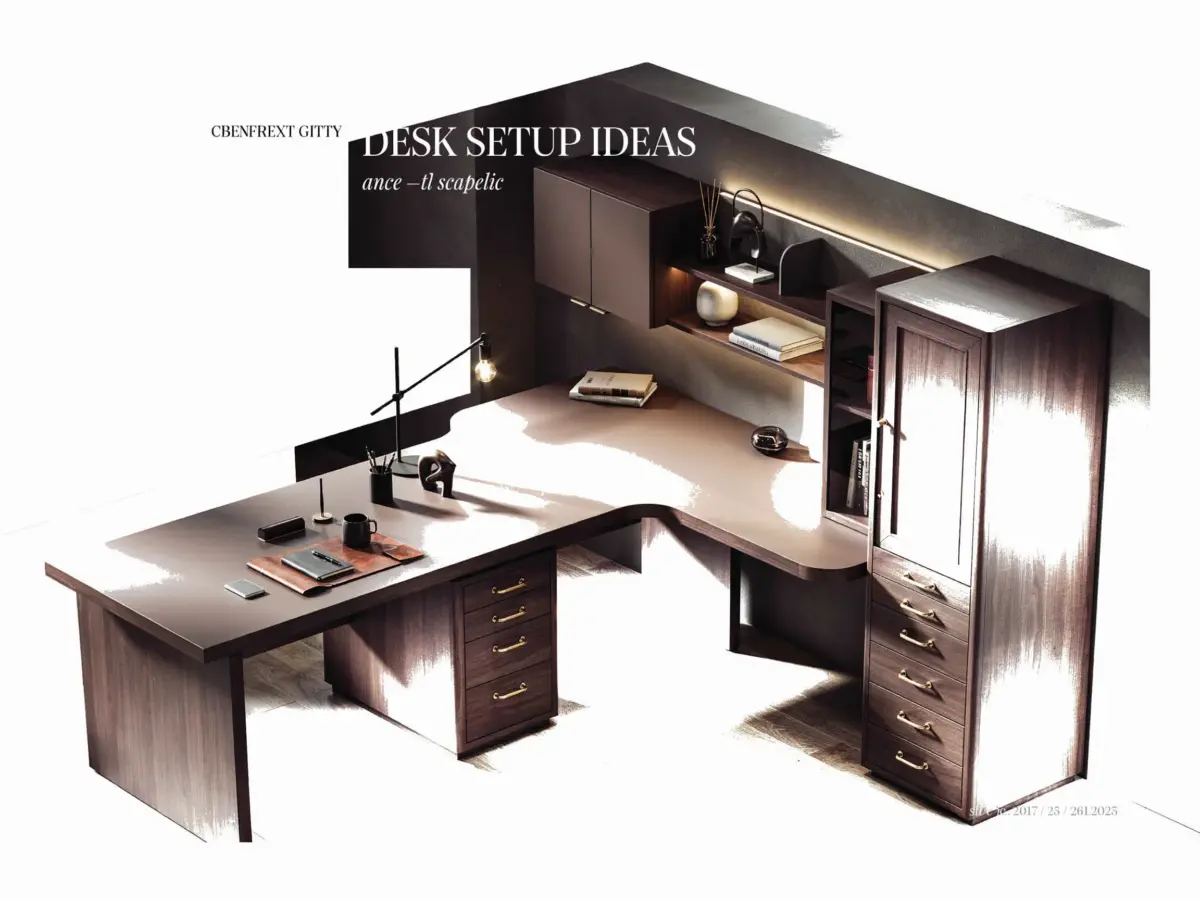
If you work from home but feel like your desk is fighting for space with your bed, couch, or kitchen table, you are not alone. I have spent years tweaking my own tiny office corner, and I have learned that having the right desk setup ideas can completely change how you feel about your day. When you only have a few square feet to work with, every inch counts. The goal is not just to squeeze in a monitor and a keyboard, but to create a place where you can actually focus, move comfortably, and avoid that afternoon slump. Let me walk you through five different themes I have tried or seen work wonders for friends in cramped spaces.
Corner Desk Setup Ideas for Small Spaces That Actually Use Dead Air
Corners are the most underused real estate in any room. Instead of letting that spot collect dust bunnies, turn it into a proper workstation. I personally love a corner desk because it gives you two surfaces without taking up the floor area of a full L-shape. Look for a desk that fits snugly into a 90-degree angle. Many small corner desks come with a rounded front so you can slide your chair right in without banging your knees.
One trick I swear by is mounting a small shelf above each side of the desk. This keeps your monitor at eye level and frees up the actual desk surface for a notebook and a coffee mug. Add a desk lamp with a swing arm to light the whole corner evenly. If you can, paint the wall behind your monitor a lighter color to make the space feel bigger. A corner setup also hides cable mess behind the desk legs, which is a huge bonus in a small room.
Compact L Shaped Desk Layouts for Work and Side Hustles
An L-shaped desk might sound too big for a tiny room, but I have found that a small L shape actually creates two distinct zones. One side holds your main computer setup, and the other becomes a drop zone for papers, a second monitor, or even a tablet for note taking. The key is choosing a desk that is less than 48 inches on each side. Many brands make compact L desks with a reversible return so you can decide which side sticks out.
Place the desk so the longer side faces the door or your main view, and the shorter side hugs the wall. This gives you a clear line of sight and prevents the desk from feeling like it is closing in on you. I also recommend using a rolling file cabinet that tucks under the shorter leg. It keeps your printer and supplies hidden but still reachable. For cable management, attach a wire tray under the desktop where the two sections meet. You will never trip on cords again.
- Measure your room first. Even the smallest L shape needs at least 36 inches of clearance on the open side for your chair.
- Use a corner monitor arm. It lifts your screen off the desk and frees up the exact spot where the two desks meet.
- Match the desk height to your chair. If your desk is fixed height, get an adjustable chair with good lumbar support.
Floating Wall Desk Ideas for Ultra Tiny Rooms and Lofts
When floor space is truly nonexistent, a floating desk is my favorite solution. You mount a sturdy shelf or butcher block directly to the wall, and there is no legs taking up square footage. You can even fold it up when you are not working. I helped a friend install a floating desk in her hallway, and it gave her a functional office without sacrificing her living area. Make sure you use heavy duty brackets that can hold at least 50 pounds, especially if you plan to mount a monitor arm on it.
Pair your floating desk with a small stool or a chair that slides completely underneath. This way you can push the chair in and the desk disappears visually. Add a narrow rail or small shelf above the desk for a few pens and a plant. Keep the whole thing minimalist. A floating desk works best if you are disciplined about clutter. If you tend to pile things, set a rule: only keep what you need for the current task. Everything else goes in a nearby drawer or basket.
Ergonomic Home Office Layouts for Tight Desk Footprints
Just because your space is small does not mean your body should suffer. I have tested several ergonomic layouts in my own narrow corner, and the biggest change came from using a monitor arm. A good arm lets you adjust the screen height and distance without moving the desk. For a small space, look for an arm that clamps to the back edge of the desk, not the side, so you do not lose valuable surface area.
Your keyboard and mouse should sit at elbow height. If your desk
#DeskSetupIdeas #SmallHomeOffice #Ergon