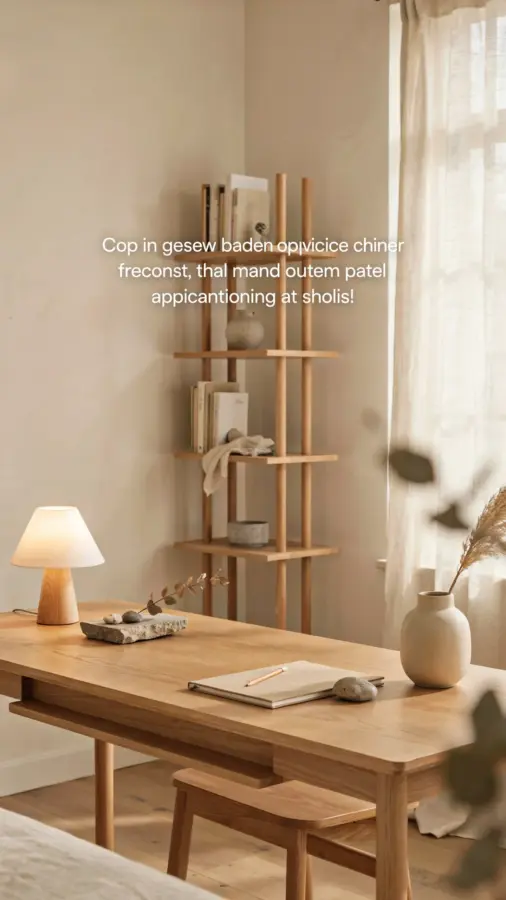
If your home office desk feels more like a pile of reference books, notebooks, and random cables than a place to get work done, you are not alone. I spent months bumping my knees against a stack of textbooks I swore I would return to the shelf “tomorrow.” Then a friend mentioned a rotating bookshelf – a small, spinning tower that sits next to your desk. I was skeptical, but after trying one, I honestly cannot imagine going back. It is the kind of simple tool that makes you wonder why every small office does not have one.
What Exactly Is a Rotating Bookshelf and Why Would You Want One?
A rotating bookshelf is basically a set of shelves that spin on a central pole, like a lazy Susan for your books. Some are tall and skinny, others are short and wide. The key feature is the 360-degree rotation. You do not have to shift a whole stack to grab something from the back. You just give it a gentle turn and reach in.
If you work from a small desk, you know the struggle of keeping reference materials close without them taking over your mouse pad. This shelf sits beside you, not on top of your desk. It keeps the surface clean while putting everything you need within arm’s reach. That alone can save you from the “where did I put that manual” panic that kills your flow.
I first saw one in a tiny apartment in New York. The owner had a desk in the corner and a rotating shelf tucked next to it with cookbooks, a planner, and a spare phone charger. It looked tidy without feeling sterile. That is when I understood the appeal – it is about making a small space work smarter, not harder.
How a Rotating Bookshelf Helps Your Home Office Desk Setup
Your desk is the most precious real estate in your home office. Every square inch counts. A home office desk with a rotating shelf nearby means you can store a dictionary, a tablet, or a stack of printed reports without sacrificing your work area. The shelf does the job of a bulky drawer unit but takes up a fraction of the floor space.
Think about the last time you had to stand up and walk to a shelf across the room just to grab a single binder. That interruption breaks your concentration. A rotating shelf placed beside your chair keeps those items within a slight stretch, not a full stride. It supports a more continuous workflow, especially if you are researching and need constant access to different sources.
I use mine to hold the three most used binders for my side hustle, a small notepad for random ideas, and a cup of pens. My desk surface now holds only my laptop, a mouse, and a coffee mug. That clear space reduces visual clutter, which honestly makes me feel more focused.
Where to Place a Rotating Bookshelf for Maximum Space Saving
Location matters more than you think. The best part about these shelves is their small footprint. Most models are about 12 to 14 inches in diameter, so they fit in spots that would otherwise be dead zones. A classic choice is the corner of the desk. If your desk is flush against a wall, you can slide the shelf into the corner next to it, and it will not stick out into the room.
Another option is the gap between your desk and a wall. If you have a few inches of empty space on the side, a slim rotating shelf can slot right in. For standing desks, placing the shelf on the floor next to the base works well because you can spin it from a standing height without bending much.
I have also seen people put one under a window or beside a filing cabinet. The key is to keep it close enough that you can turn it without leaving your chair. If you have to lean too far, you might as well walk to a regular shelf. A quick test: sit in your chair, close your eyes, and reach to the side. If your hand touches the shelf easily, you found the right spot.
What to Put on Your Rotating Bookshelf (Beyond Just Books)
It is called a bookshelf, but you can store way more than books on it. Think of it as a desktop organizer that happens to spin. Here are some practical things I load onto mine, and you can mix and match based on your needs:
- Reference books you use daily – dictionaries, style guides, manuals.
- Notebooks and planners that you flip through during meetings or brainstorming.
- Chargers and small electronics like a power bank or a USB hub, kept in a small bin on one shelf
#rotatingbookshelf #homeofficedesk #deskorganization #spacesaving #officeorganization