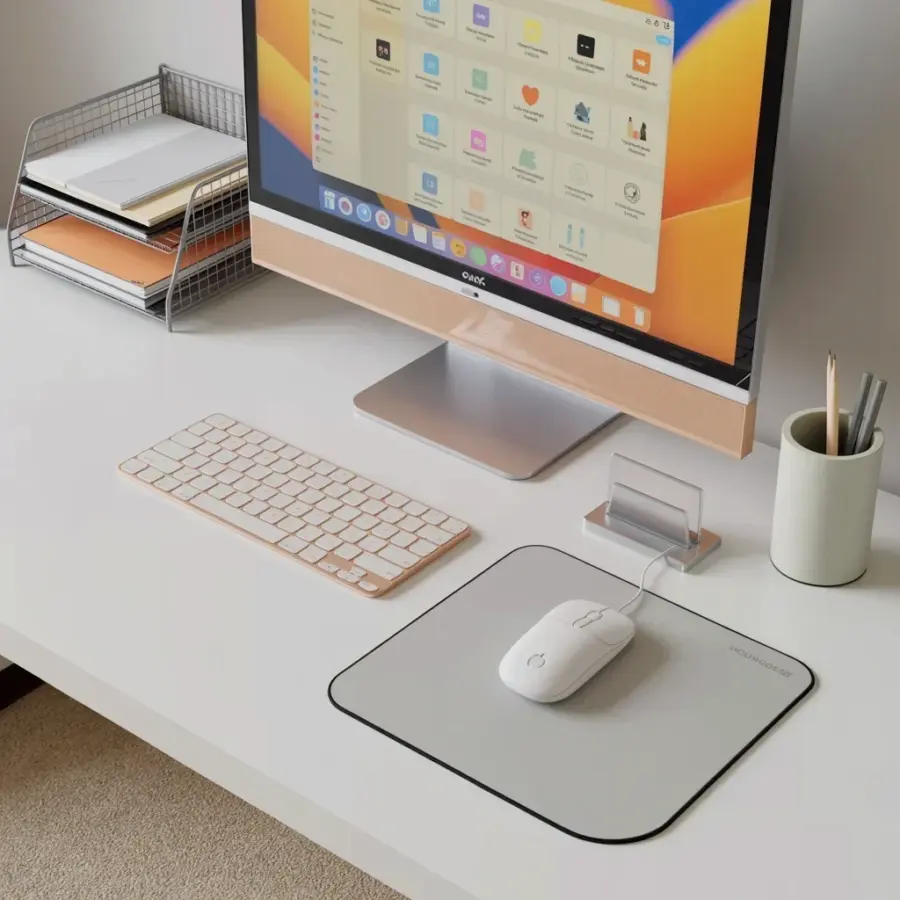
Ok so it’s 3pm on a Tuesday and my fingers are finally warm for the first time in a month. The culprit? A $20 budget desk heater I bought out of pure desperation. This thing sits under my monitor, blows a gentle stream of heat exactly where I need it, and somehow manages to warm my hands without wrecking my electric bill. Honestly, I’m still a little mad I didn’t buy one years ago. If you work from home and your digits start feeling like popsicles by early afternoon, this energy efficient heater might be the best money you’ll spend on your home office setup all year.
## The biggest mistake? Buying a heater that warms the whole room
I get it. Those big radiator-style heaters look like the responsible choice. They’re not. Not for a single person sitting at a desk. Those units pull 1,500 watts and turn your office into a sauna while your hands stay cold for the first twenty minutes. Meanwhile, a proper budget desk heater runs at 100 to 300 watts. Do the math and it’s roughly a tenfold difference in energy use. You don’t need the whole room warm. You need your hands warm. Here’s the thing: a little heater pointed at your fingers does that in under a minute. The rest of your space stays cool, which honestly feels kind of nice when the air outside is doing its best freezer impression.
## Mistake number two, ignoring the noise and buying a fan that roars
Nothing kills focus faster than a tiny fan that sounds like a blender stuck on puree. I learned this the hard way with a no-name brand that hummed at a frequency I could feel in my teeth. Not great. If you’re on video calls regularly, your coworkers will ask about the strange whirring in the background, and you’ll get tired of apologizing. Quiet units in the $20 range exist, I promise. Look for the decibel rating if the listing mentions one, but honestly, read the reviews. People are loud about loud fans. Any review section with the word “buzzing” more than twice? Red flag. Move on.
## Mistake number three, skipping the safety check before you plug it in
Safety stuff is dull until it suddenly isn’t. My first heater had a tip-over switch but it shut down if I looked at it sideways, which drove me insane. Then I found a model with auto shut-off that actually worked. What I didn’t think to check was the plug. Some cheap heaters have plugs that get warm after an hour, and that’s how house fires start. Press your palm against the plug after a long session. If it’s hot, send it back. Also, check the cord length before buying. A 3-foot cord means you’re stringing an extension cable across your desk, which is ugly and a trip hazard. Six feet minimum. Trust me on this.
## Mistake number four, heating the wrong spot on your desk
Placement matters way more than the price tag. My first week, I tucked the heater under my desk and pointed it at my knees. Warm knees, still freezing hands. Genius, right? Then I moved it up onto the desk and angled it toward my forearms and wrists while I type. That’s where the blood flow slows down. That’s the spot that actually keeps you comfortable. And please don’t block the air intake with papers or a coffee mug. Yes, I did that. Yes, I also spilled the coffee on my keyboard about thirty seconds later. The two events were absolutely related.
## Mistake number five, falling for wattage bragging
Bigger wattage doesn’t mean better warmth. Some heaters advertise 500 watts and still push out lukewarm air because the internals are cheap. Wattage is just energy draw, not a quality score. What you want is a PTC ceramic heating element. That’s the thing that warms up fast and keeps a steady temperature without blasting you. Ceramic elements also self-regulate, so they don’t get dangerously hot on the outside. Look for a model with two settings, high and low. That’s plenty. I use low maybe nine times out of ten. High only when the room dips below sixty and my cat is demanding a warm lap.
## So here’s the checklist that actually works for a wfhsetup
After all my trial and error, these are the specs I look for whenever someone asks me for homeofficeessentials recommendations:
– A PTC ceramic element, because it heats fast and stays comfortable
– Low and high settings so you can dial it down on milder days
– Auto shut-off that trips if the unit tips over
– Quiet operation under 30 decibels if the listing mentions it
– A power cord longer than 6 feet, since extension cables are the enemy
– A footprint small enough that it doesn’t shove
Leave a Comment