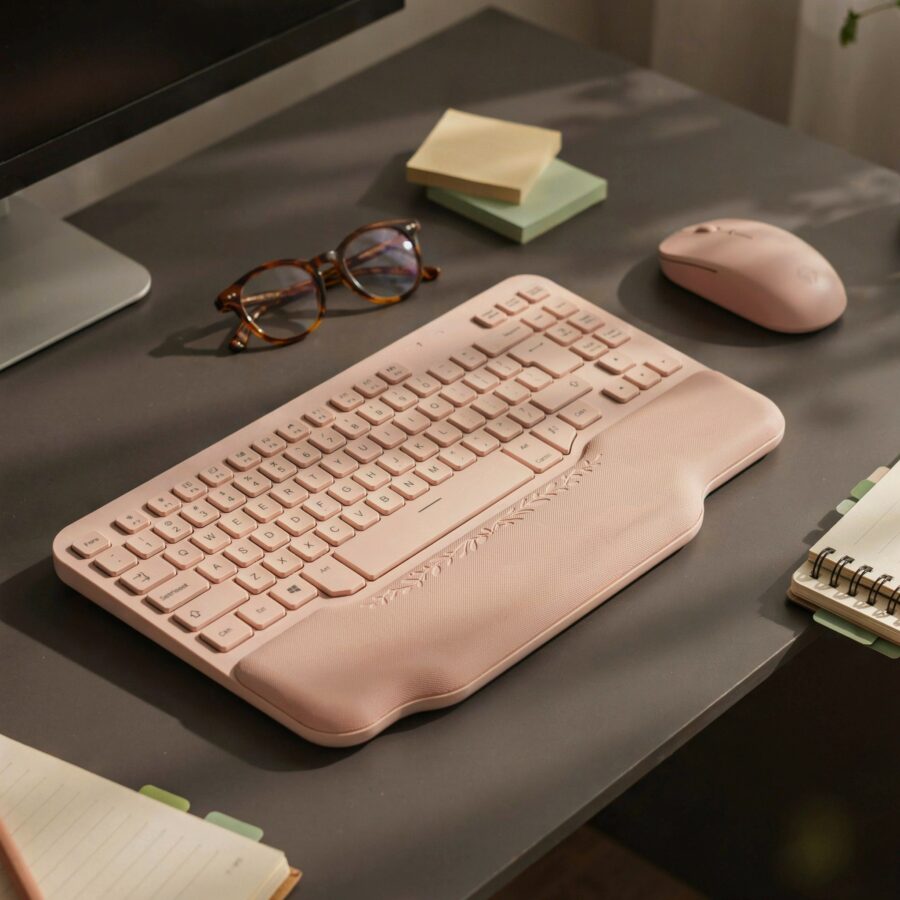
Ignoring Your Wrist Angle When Choosing a Palm Rest
The biggest mistake I see people make is buying any old cushioned palm rest for typing without thinking about their natural wrist position. If your wrist is bent upward or downward while you type, the pad is working against you. A neutral wrist angle means your hand should be in line with your forearm, not tilted.
Before you pick a pad, sit at your desk and let your hands float over the keyboard. Notice where your palms land. Then measure the height of that gap. A three layer wrist support relief pad works best when it fills that space without forcing your wrist into a new angle. Too high and you get strain. Too low and you get nothing.
Buying a Pad That’s Too Soft Or Too Firm
Another common error is choosing a wrist rest based on looks or reviews that don’t match your needs. I’ve tested pads that felt like marshmallows and others that felt like bricks. Neither helped for long typing sessions. The right cushioned palm rest for typing should have a soft top layer that molds slightly, a middle layer that distributes pressure, and a firm base that doesn’t collapse.
Look for three layer wrist support relief designs specifically. The top layer gives comfort, the middle layer lifts pressure from the carpal tunnel area, and the bottom layer keeps the pad stable. If your pad flattens completely after a week, it’s too soft. If it doesn’t give at all, it will create hot spots.
Placing the Palm Rest in the Wrong Spot
A lot of people plop the wrist pad directly in front of the keyboard edges. That feels natural but it can actually push your wrists into extension. I’ve found that the best position is just a few centimeters away from the keyboard base, so the heel of your palm rests on the pad while your fingers hover naturally over the keys.
- Place the pad so your wrists are straight, not bent up or down.
- Allow a small gap between the pad and the keyboard for air circulation.
- If you use a tenkeyless keyboard, adjust the pad width accordingly.
- For sloping keyboards, consider a wedge shaped cushioned palm rest for typing.
When you get the placement right, you barely notice the pad. That’s the goal. You shouldn’t have to adjust your typing style to accommodate the support. It should disappear into your workflow.
Not Checking the Three Layer Material Quality
Many budget wrist rests claim three layer support but actually use a single chunk of foam with a fabric cover. Real three layer wrist support relief uses distinct materials: a breathable top fabric (like mesh or microfiber), a memory foam or gel middle, and a non slip rubber or silicone base. I’ve used pads where the layers delaminate after a month because the glue wasn’t strong enough.
Inspect the construction before you buy. If the listing doesn’t specify the layers or materials, assume it’s a basic pad. For home office essentials, you want durability. A good cushioned palm rest for typing should last at least a year of daily use without losing shape or having the cover peel away.
Forgetting to Clean and Maintain Your Wrist Pad
Palm rests collect oils, dust, and crumbs faster than you think. I’ve seen pads turn yellow and hard because people never cleaned them. That ruins the feel and the hygiene. Most three layer wrist support relief pads have removable covers that you can wash in cold water. If yours doesn’t, spot clean with a mild soap and let it air dry completely.
Set a reminder to wipe it down once a week. For gel or foam cores, avoid getting them wet. A simple microfiber cloth with a bit of rubbing alcohol can keep the surface fresh. A neglected wrist rest becomes a breeding ground for bacteria, especially if you eat at your desk. That’s one of those wfh must haves that people forget to maintain.
Using a Palm Rest When You Really Need a Different Solution
Not all wrist pain comes from lack of support. Sometimes it’s from a too high desk, a too low chair, or a keyboard that’s angled poorly. I’ve had clients buy a cushioned palm rest for typing only to find out their desk height was the real problem. A wrist pad can help, but it’s not a fix for ergonomic setup errors.
Check these basics first: Your chair height should let your elbows form a 90 degree angle. Your keyboard should sit at or just below elbow level. Your monitor should be at eye height. Only then does a padded rest address the remaining pressure on the heel of your palm. If you skip the big picture, you’re just covering up a symptom.
Overlooking Compatibility With Your Keyboard Style
Mechanical keyboards have different heights than membrane ones. Low profile keyboards need thinner pads. Split keyboards may need two separate rests. I see people buy a generic wrist rest for a mechanical board and it’s too tall, causing wrist extension. Check the thickness of your cushioned palm rest for typing against the front edge of your keyboard.
Many three layer wrist support relief pads come in multiple sizes. Measure the length of your keyboard and the height from the desk to the keyboard’s front lip. Add about 5mm of clearance. If the pad is too thick, your wrists will tilt upward. If it’s too thin, you get no relief
#ergonomicwristrest #wristpadsupport #homeofficeessentials #wfhmusthaves #deskaccessories
Leave a Comment